Date:2026-06-26
A maintenance technician was called to inspect a distribution panel after repeated shutdowns interrupted production.
The report sounded simple enough.
A breaker had tripped three times within two weeks.
Each time, operators reset it and the system returned to normal.
No cables appeared damaged.
No equipment had completely failed.
The question was straightforward:
Why was the breaker opening if everything seemed to be working?
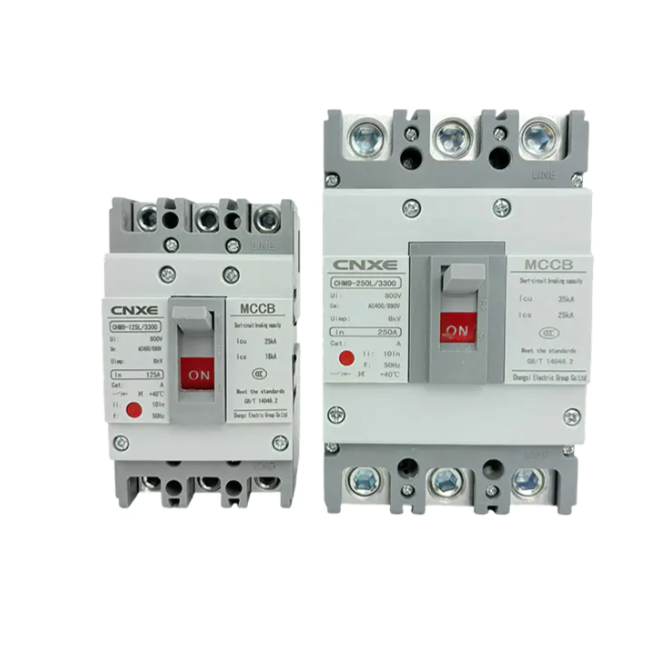
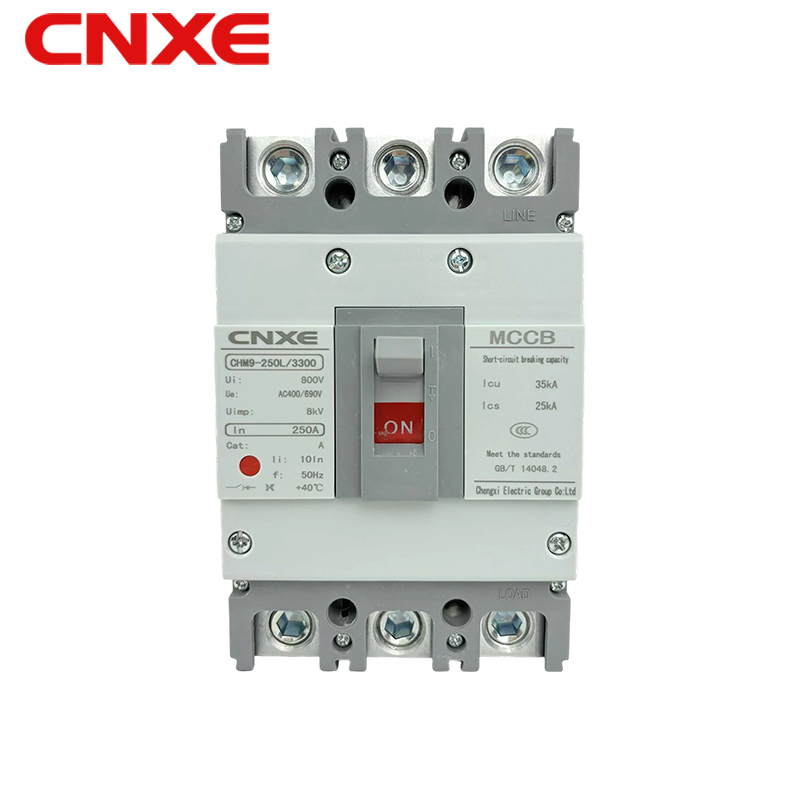
Situations like this are common in industrial and commercial facilities. When a thermal magnetic molded case circuit breaker trips unexpectedly, attention often turns immediately toward the breaker itself. Yet experienced electricians know that the breaker is frequently responding to a condition somewhere else in the system.
Understanding that difference can save hours of troubleshooting.
The Problem Is Not Always A Short Circuit
When people hear the word "trip," they often imagine a major electrical fault.
In reality, many trips occur without dramatic events.
A motor may begin drawing slightly more current than normal.
A conveyor may experience increased mechanical resistance.
A ventilation fan may accumulate dust and become harder to rotate.
None of these changes happen overnight.
Current demand gradually increases.
Heat slowly builds inside conductors and equipment.
For weeks or even months, the electrical system continues operating.
Then one day the breaker opens.
In these situations, a thermal magnetic molded case circuit breaker is not necessarily indicating equipment failure. It may simply be responding to operating conditions that have drifted beyond what the system was originally designed to handle.
Small Changes Can Create Larger Effects
Electrical systems rarely remain exactly as they were on installation day.
Production lines expand.
Additional equipment is connected.
Operating hours increase.
Loads that were once temporary become permanent.
Each change may seem insignificant when viewed individually.
Over time, however, those changes accumulate.
Many facility managers have encountered panels that appeared to have plenty of spare capacity years earlier but now operate much closer to their limits.
Interestingly, the breaker is often the first component to reveal this gradual shift.
A thermal magnetic molded case circuit breaker continuously reacts to the current flowing through it. While operators may not notice subtle increases in electrical demand, the protection device effectively monitors those changes every second the system operates.
Temperature Often Changes The Story
One factor frequently overlooked during troubleshooting is ambient temperature.
A distribution panel located in a climate-controlled room behaves differently from one installed near production equipment, rooftops, or outdoor enclosures.
Summer temperatures can influence electrical performance in ways that are not immediately obvious.
A breaker operating comfortably during cooler months may face different conditions during periods of elevated heat.
Electrical rooms with limited airflow can create additional challenges.
Maintenance personnel often discover that nuisance tripping occurs during specific seasons or operating conditions rather than throughout the entire year.
When investigating a thermal magnetic molded case circuit breaker, environmental conditions deserve the same attention as electrical measurements.
What Experienced Electricians Usually Check First
Interestingly, many experienced technicians do not begin troubleshooting by replacing the breaker.
Instead, they start asking questions.
Has new equipment been added recently?
Has production output increased?
Are motors operating under heavier loads?
Has the installation environment changed?
These questions often reveal useful clues before a single tool is used.
Thermal imaging inspections, load measurements, and operating history reviews frequently provide a clearer picture than immediately replacing components.
In many cases, the breaker is functioning exactly as intended.
The real issue may involve equipment wear, changing load patterns, inadequate ventilation, or system modifications made long after the original installation.
A thermal magnetic molded case circuit breaker serves as a protective device, but it also acts as an early warning indicator. When repeated tripping occurs, the event should be viewed as information rather than merely an inconvenience. Understanding why the breaker opened often reveals developing conditions that might otherwise remain hidden until a more serious problem appears.
That is why experienced maintenance teams treat recurring trips as an opportunity to investigate the health of the entire electrical system rather than focusing solely on the breaker itself.
 The company is committed to providing high-quality electrical products and excellent customer service. We not only supply exquisite, top-tier products to meet your needs but also back them with a sincere and comprehensive after-sales service guarantee.
Contact Us
 +86-18067486879
 [email protected]
 281 Wei 15th Road, Yueqing Economic Development Zone, Zhejiang, China
Copyright © Chengxi Electric Group Co., Ltd. All Rights
Reserved

High Voltage Transformer & Electrical Circuit Breaker Factory




 English
  Français
  中文简体
中文简体  русский
  Español
  عربى
عربى