Date:2026-08-14
Two switchgear rooms running the same current rating can still look completely different depending on one installation decision made early in the design process: whether the air circuit breaker switch installs as a fixed unit or a withdrawable drawer assembly. This choice affects maintenance access, downtime during servicing, and how the panel gets laid out from day one. Buyers who leave this decision to a supplier's default configuration, rather than specifying it deliberately, sometimes discover the mismatch only once a maintenance event forces an unplanned outage longer than their facility can comfortably absorb.
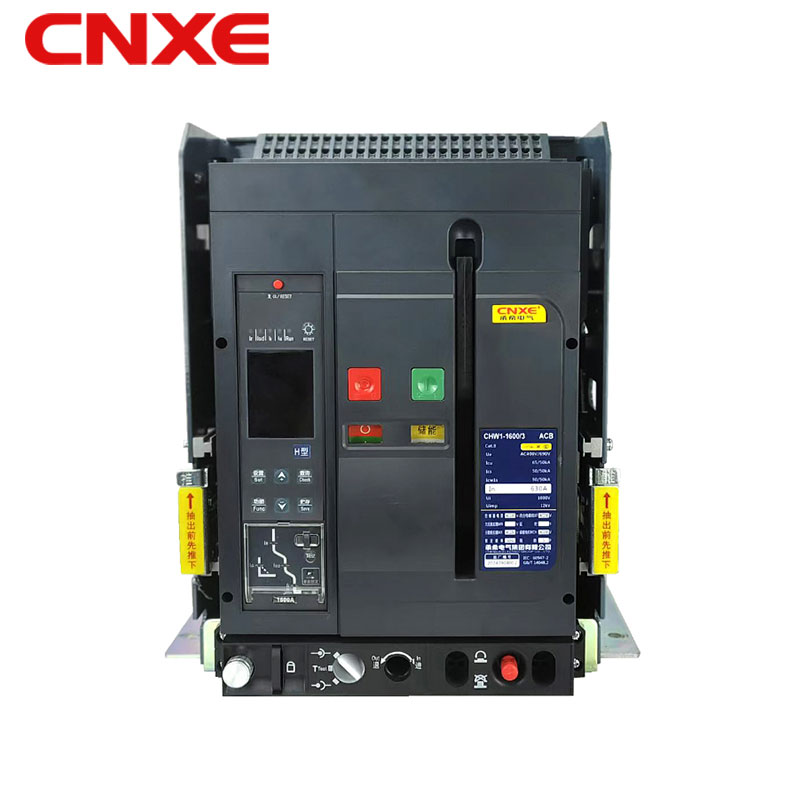
A drawer-type air circuit breaker switch slides out of its cradle for inspection or replacement without disturbing the surrounding busbar connections, which shortens downtime during maintenance since technicians can swap a faulty unit for a spare while the original goes through repair elsewhere. A fixed-type unit costs less and takes up a smaller footprint, but any service work happens with the breaker still connected in place, extending the time a circuit stays out of service. Buyers should weigh how much planned or unplanned downtime their facility can tolerate against the added cost of drawer-style installation before finalizing a panel design.
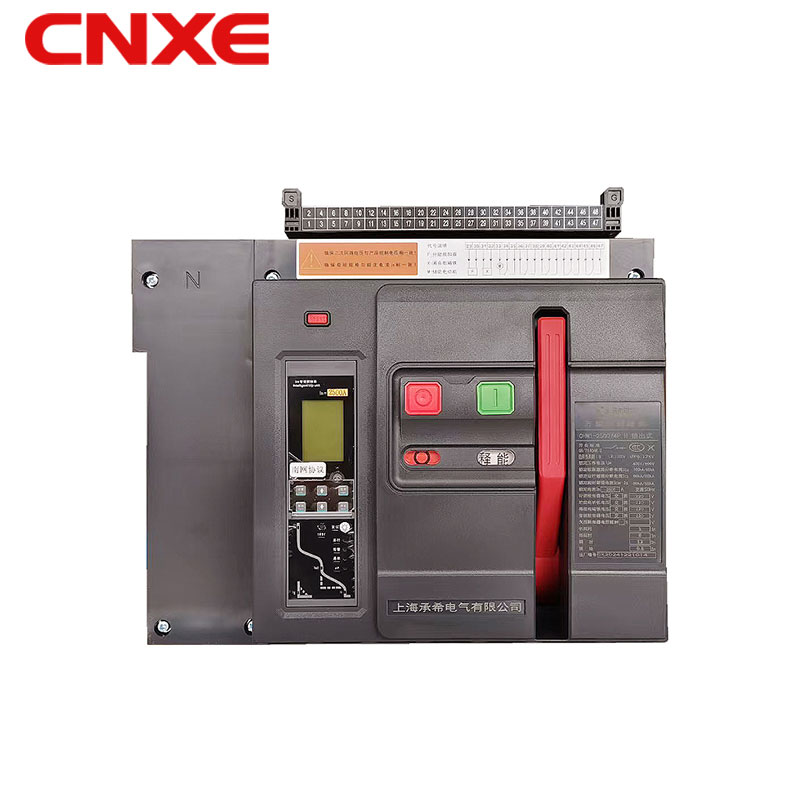
An air circuit breaker switch rated across a current range as wide as 200A to 6300A, with breaking capacity reaching up to 120kA on some frame sizes, gives buyers a single product family that can cover both moderate commercial loads and demanding industrial distribution needs. Breaking capacity specifically describes how much fault current the device can safely interrupt without damage to itself or the surrounding installation, a figure buyers should confirm against their facility's actual fault current calculation rather than assuming a higher-rated frame automatically provides adequate margin for every application.
Intelligent controllers built into modern air circuit breaker switch models commonly support four remote functions: telemetry for reading electrical parameters, remote control for opening and closing the breaker, remote adjustment for changing protection settings, and remote signaling for status reporting back to a control system. Buyers should confirm which of these four functions a specific model actually supports, since some suppliers market "smart" or "intelligent" capability without clarifying that only one or two of the four functions are included rather than the complete set.
|
Factor |
Drawer Type |
Fixed Type |
|
Maintenance downtime |
Lower, swap unit without disconnecting busbars |
Higher, servicing happens in place |
|
Upfront cost |
Higher |
Lower |
|
Panel footprint |
Larger |
Smaller |
|
Typical application |
Critical facilities needing fast service turnaround |
Cost-sensitive installations with planned maintenance windows |
An air circuit breaker switch can add residual current protection through a dedicated leakage current transformer paired with a compatible intelligent controller, extending the device's protection scope beyond overload and short-circuit conditions into ground fault detection. This optional module matters specifically for installations where personnel safety and fire prevention carry added weight, such as facilities with frequent maintenance access to live equipment. Buyers should confirm whether this leakage protection module ships as a standard inclusion or a separate add-on, since treating it as automatically included when it's actually optional can leave a documented protection gap during a safety audit.
Installation environment specifications for an air circuit breaker switch, including ambient temperature range, altitude derating, and pollution degree rating, affect long-term reliability just as much as the electrical specifications buyers typically prioritize early on. A unit rated for standard conditions can underperform its rated breaking capacity when installed at high altitude or in an environment exceeding its pollution degree rating without appropriate derating applied. Buyers installing equipment outside standard environmental conditions should request the specific derating factors from their supplier rather than assuming standard performance figures carry over unchanged to non-standard installation sites. A supplier able to walk through derating calculations for a buyer's specific altitude and climate conditions, rather than pointing only to a generic table, gives buyers more confidence that their air circuit breaker switch will perform as expected once installed at the actual project site.
 The company is committed to providing high-quality electrical products and excellent customer service. We not only supply exquisite, top-tier products to meet your needs but also back them with a sincere and comprehensive after-sales service guarantee.
Contact Us
 +86-18067486879
 [email protected]
 281 Wei 15th Road, Yueqing Economic Development Zone, Zhejiang, China
Copyright © Chengxi Electric Group Co., Ltd. All Rights
Reserved

High Voltage Transformer & Electrical Circuit Breaker Factory




 English
  Français
  中文简体
中文简体  русский
  Español
  عربى
عربى