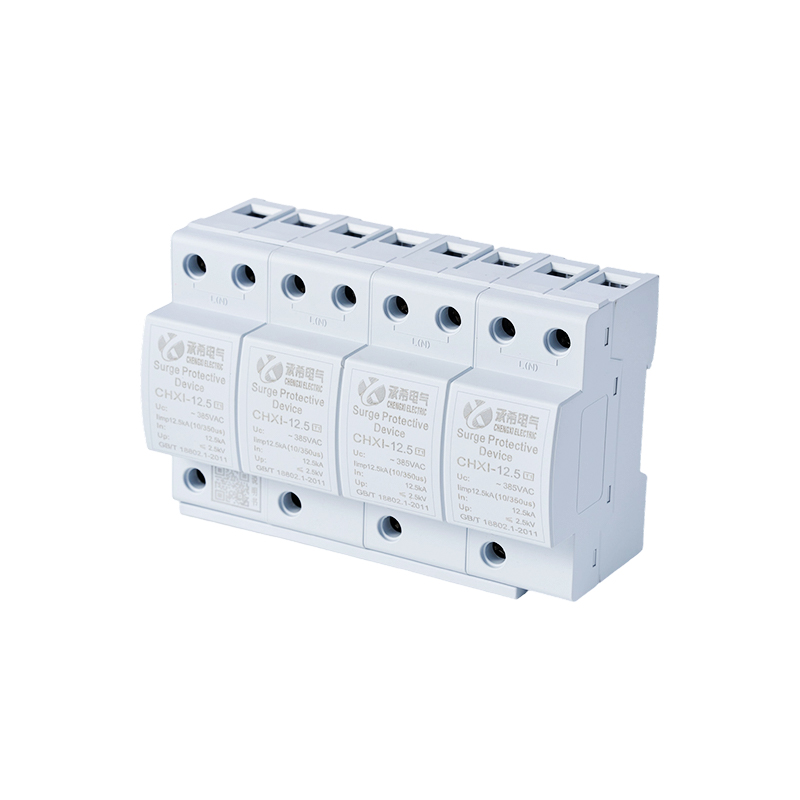
 Quick View
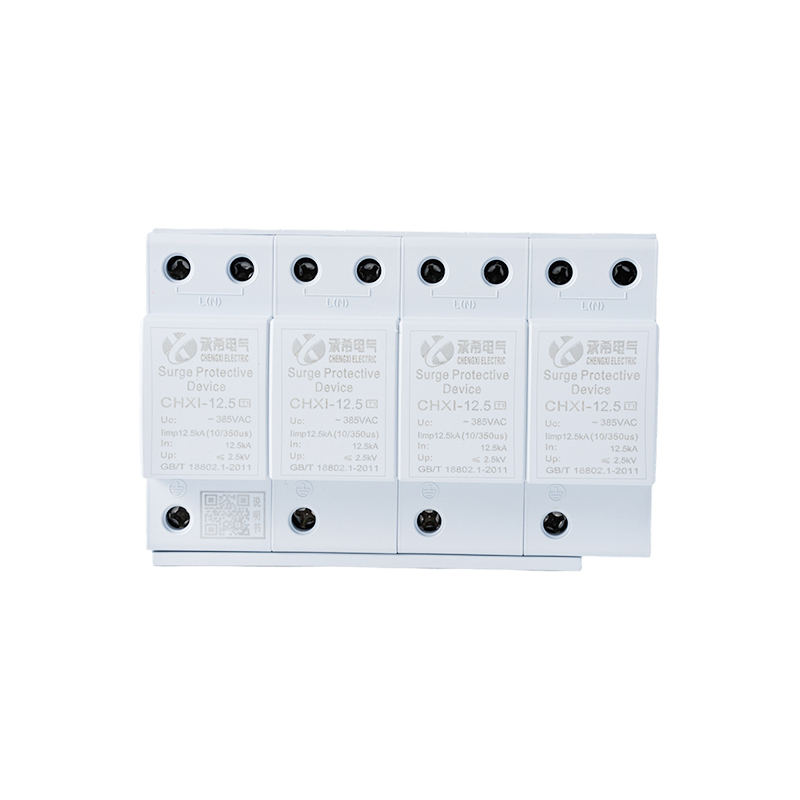
CHX1 Series Surge Protector Can Absorb Lightning Surges
Applications and Features
These surge protectors are suitable for IT, TT, TT-C, TT-S, and TT-C-S power supply systems operating at 50/60 Hz and rated up to 440 V. They provide surge protection against indirect lightning, direct lightning, and other transient overvoltages.
These surge protectors offer high protection levels, fast response, strong reliability, and easy installation and maintenance. They are adaptable to various environments and comply with international standards. They are essential safety components in power systems, ensuring stable operation by providing overvoltage protection and protecting critical equipment from natural disasters such as lightning.
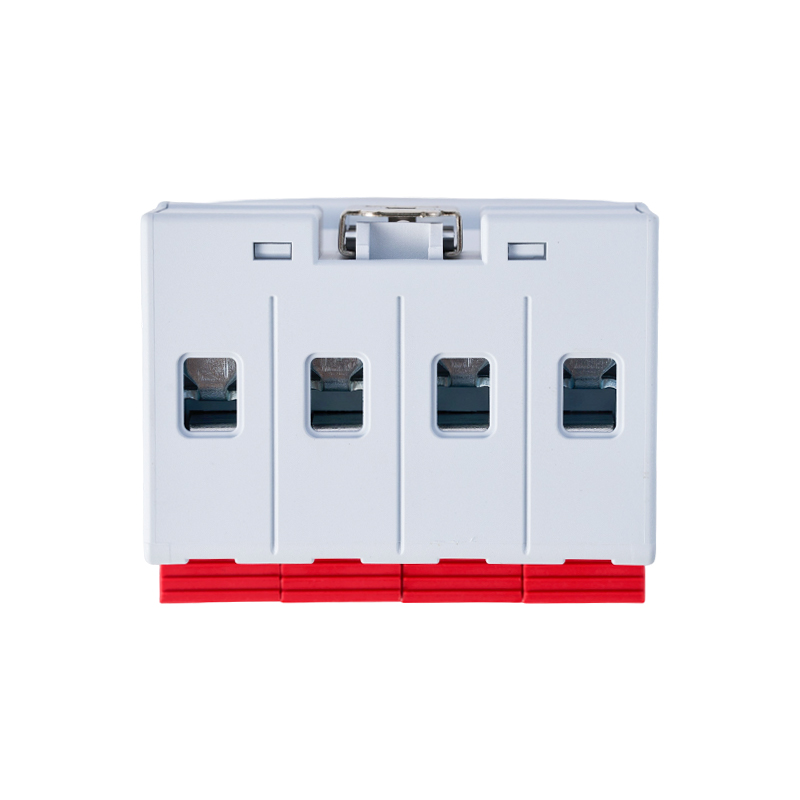
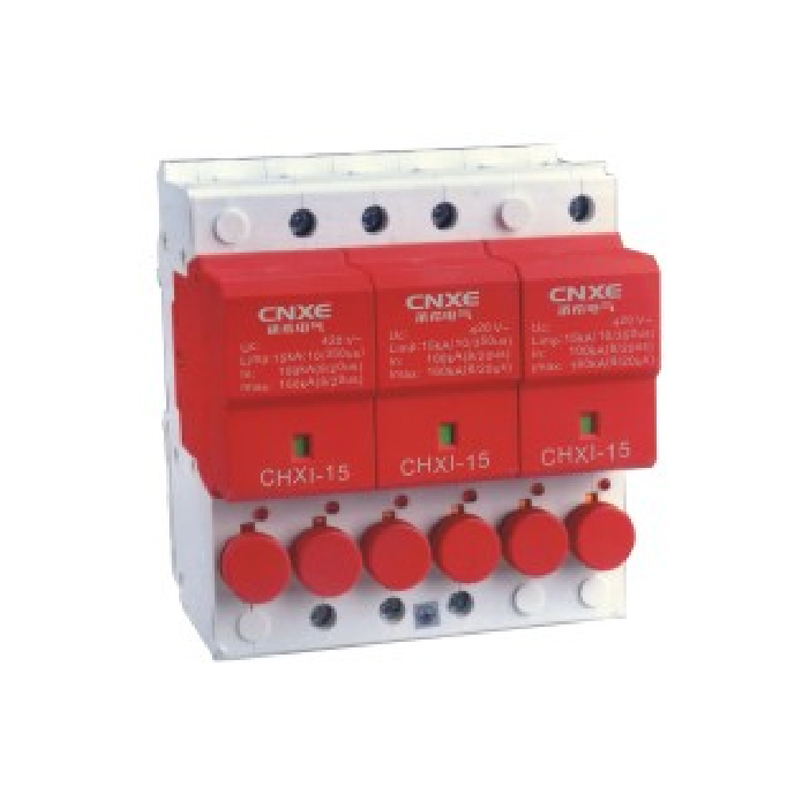
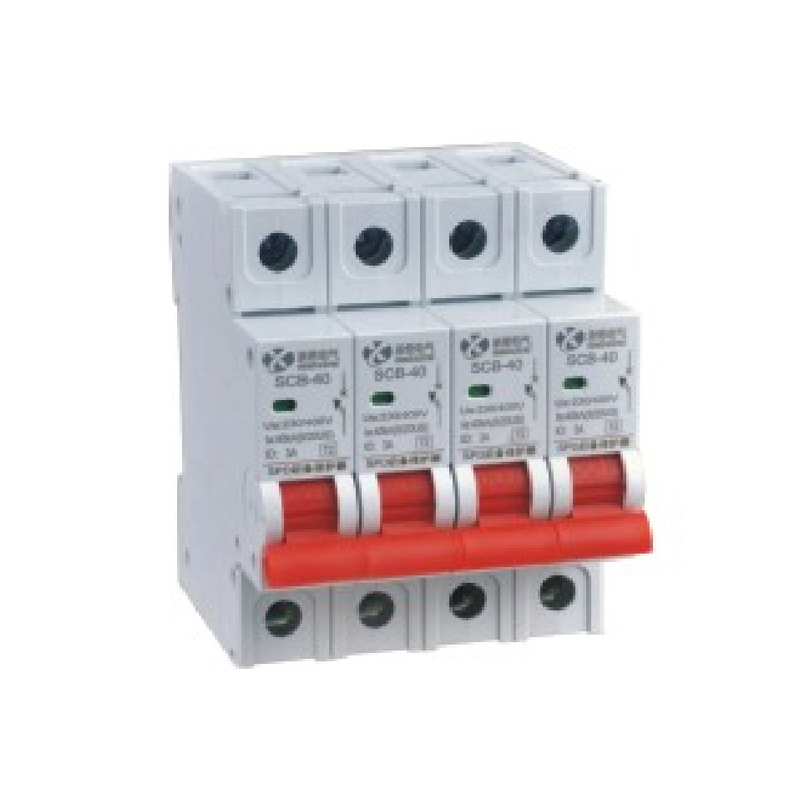
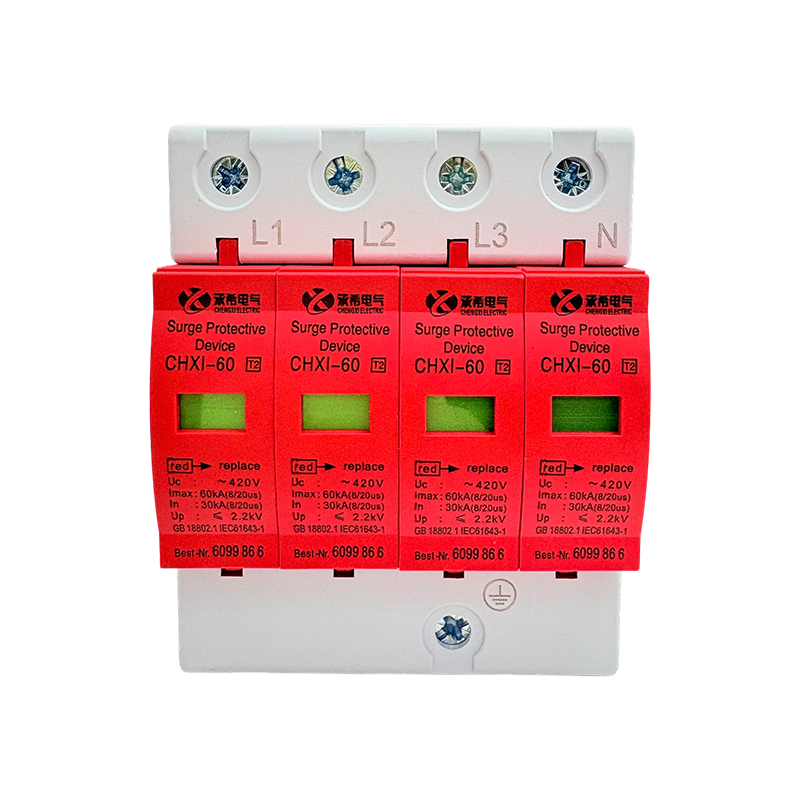 Quick View
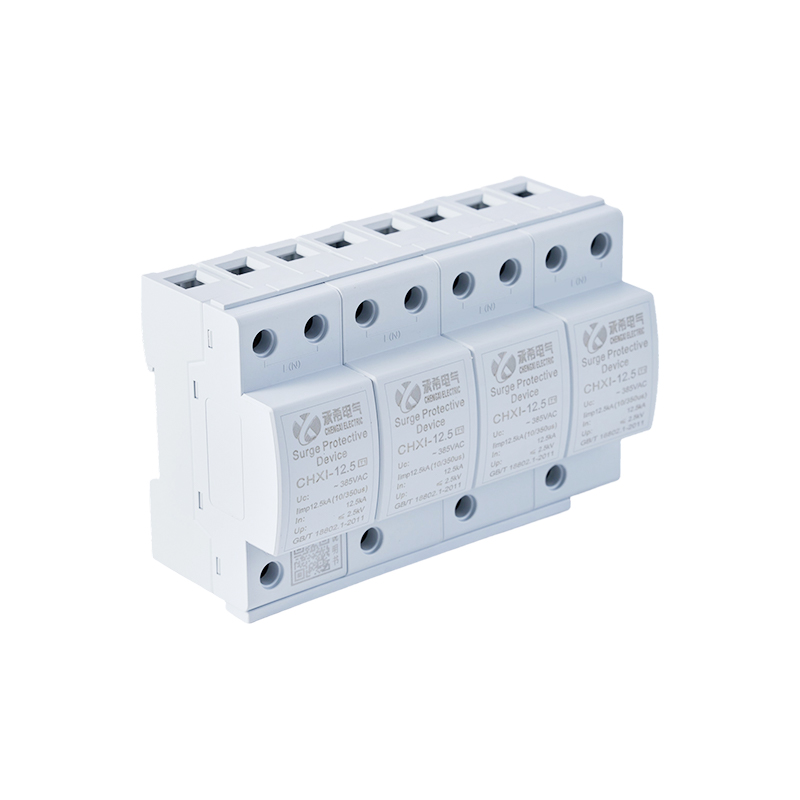
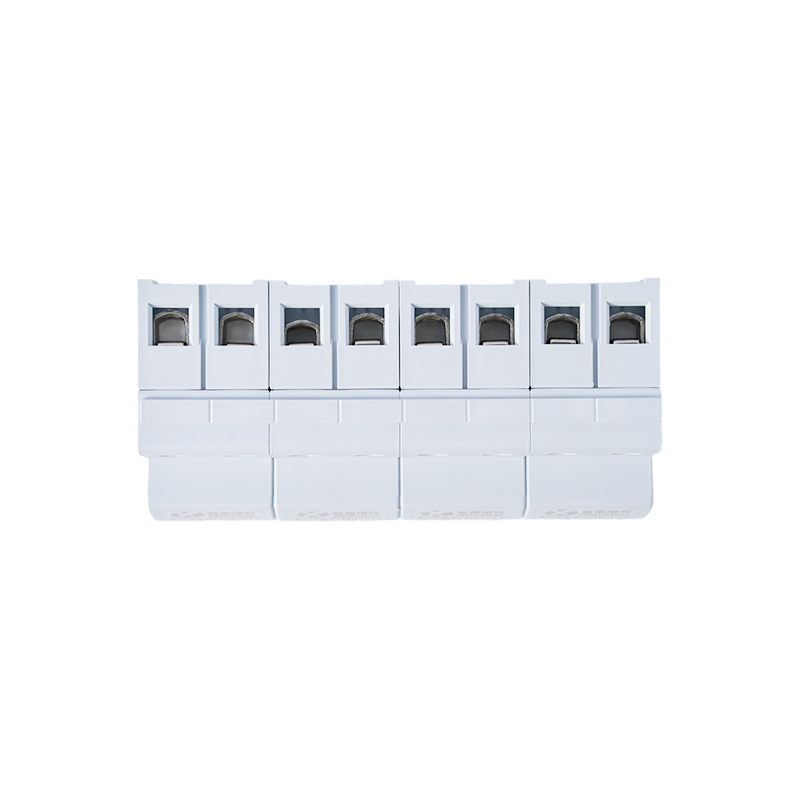
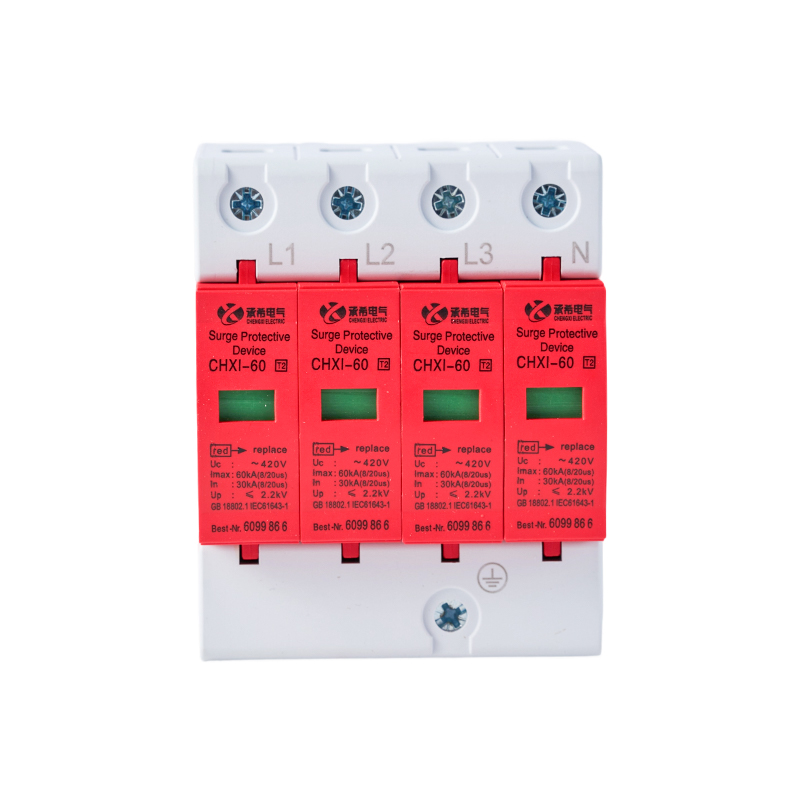
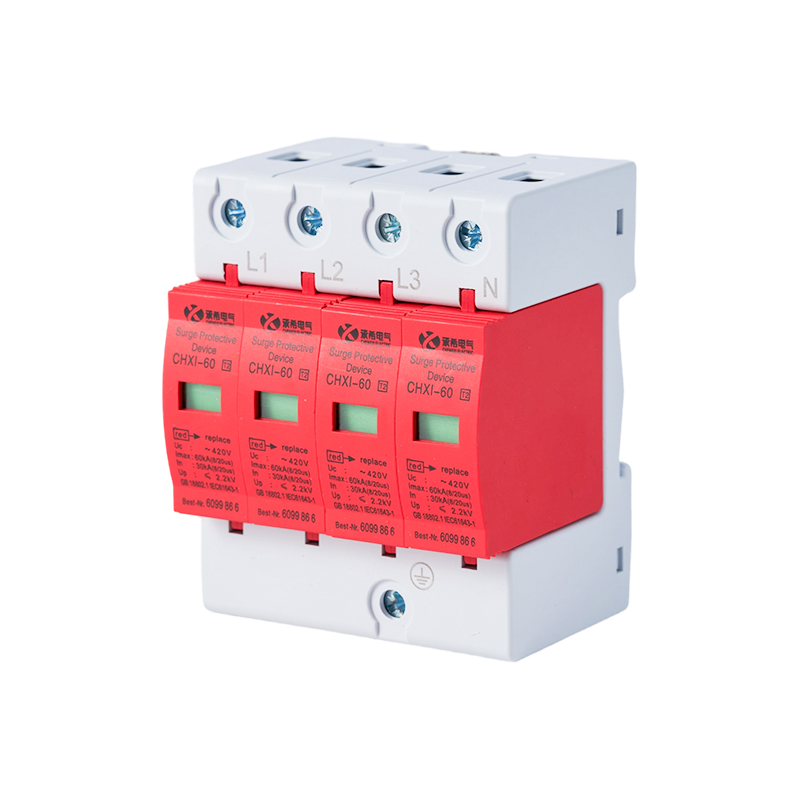
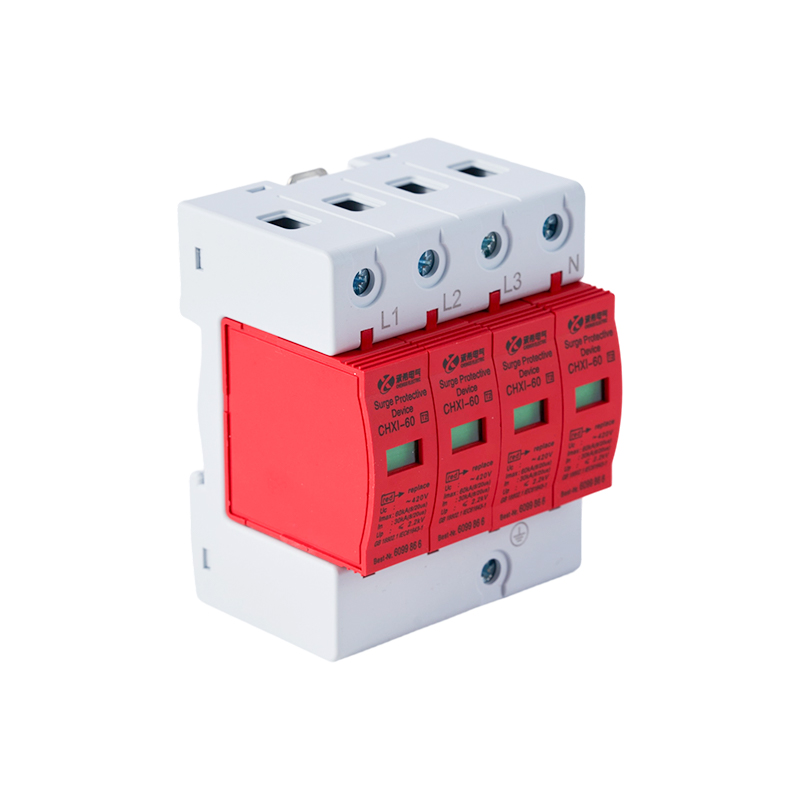
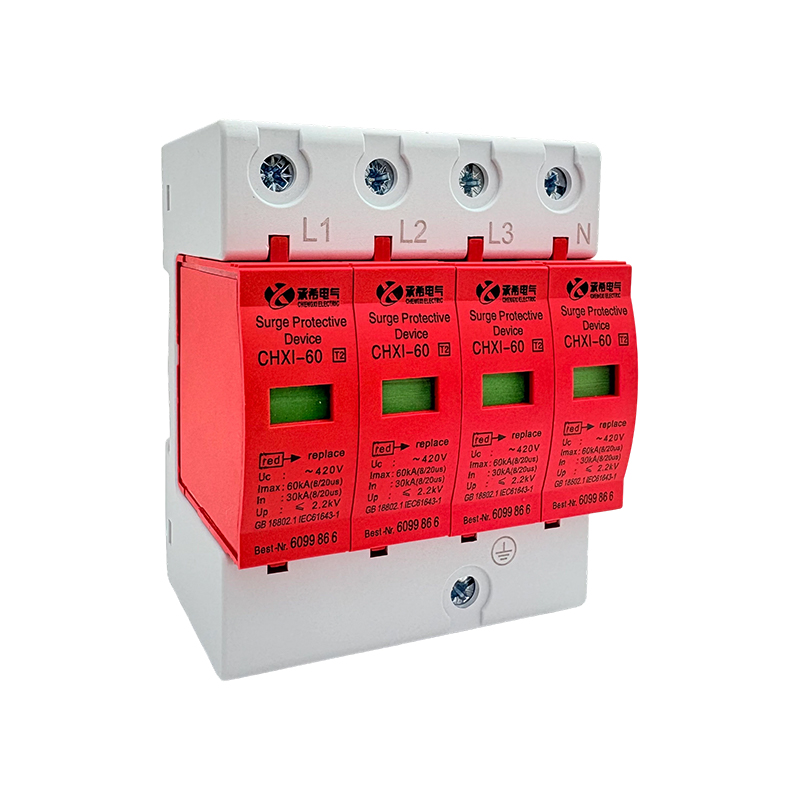
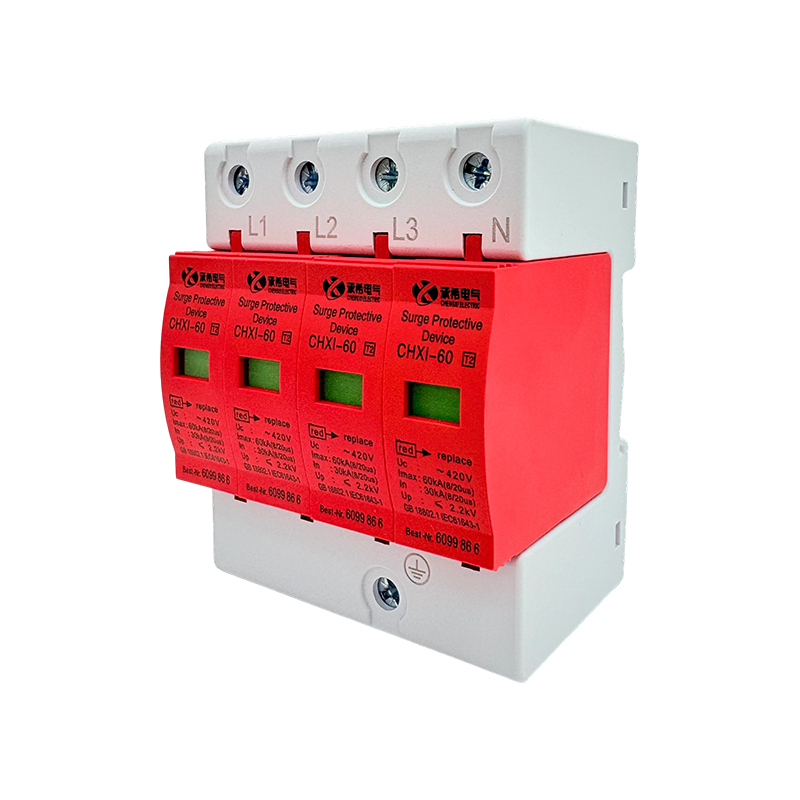
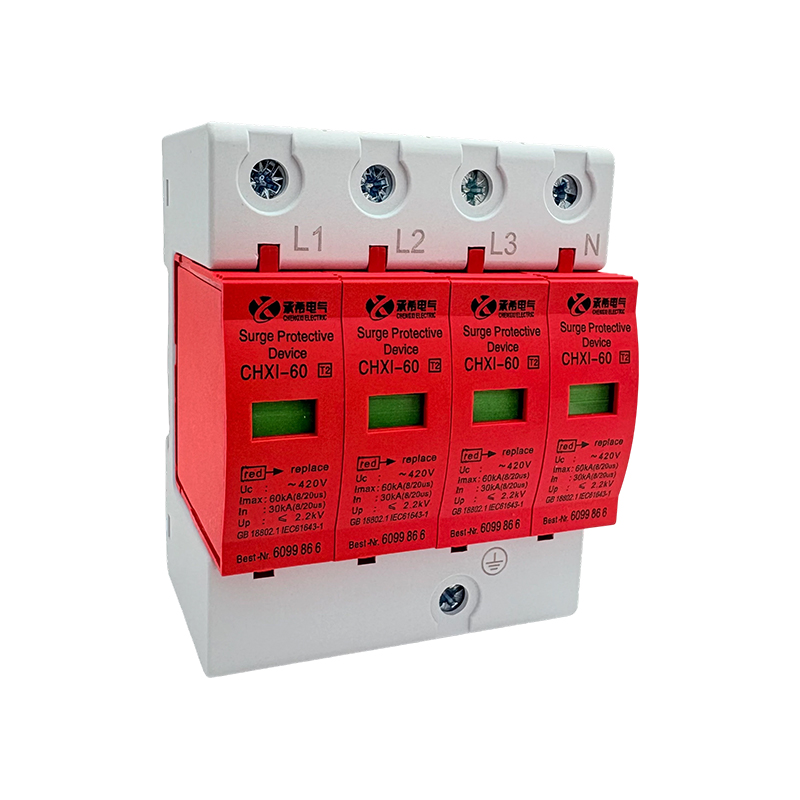
CHX1-60 ultra-large current capacity Surge Protective Device
Product Description
This 4P surge lightning protection device supports an ultra-large current capacity of 40kA/60kA, capable of instantly discharging strong surges generated by lightning strikes and grid fluctuations.
High-quality zinc oxide varistors (MOV) are adopted, featuring low leakage current and anti-aging properties. Combined with temperature control circuit breaker and overcurrent protection, the module will automatically trip when it overheats or fails, completely eliminating the risk of fire.
It is equipped with built-in status indicator lights. Some models support remote alarm terminals and can be connected to the monitoring system to provide real-time feedback on the working status.
Differentiated selling points
It simultaneously protects against three-phase live wires (L1/L2/L3) and neutral wires (N), covering 380V three-phase systems, and is particularly suitable for three-phase loads such as industrial equipment and photovoltaic inverters.
The modular design allows faulty modules to be directly plugged and unplugged for replacement without cutting off the main power supply, reducing the risk of downtime.
 Quick View
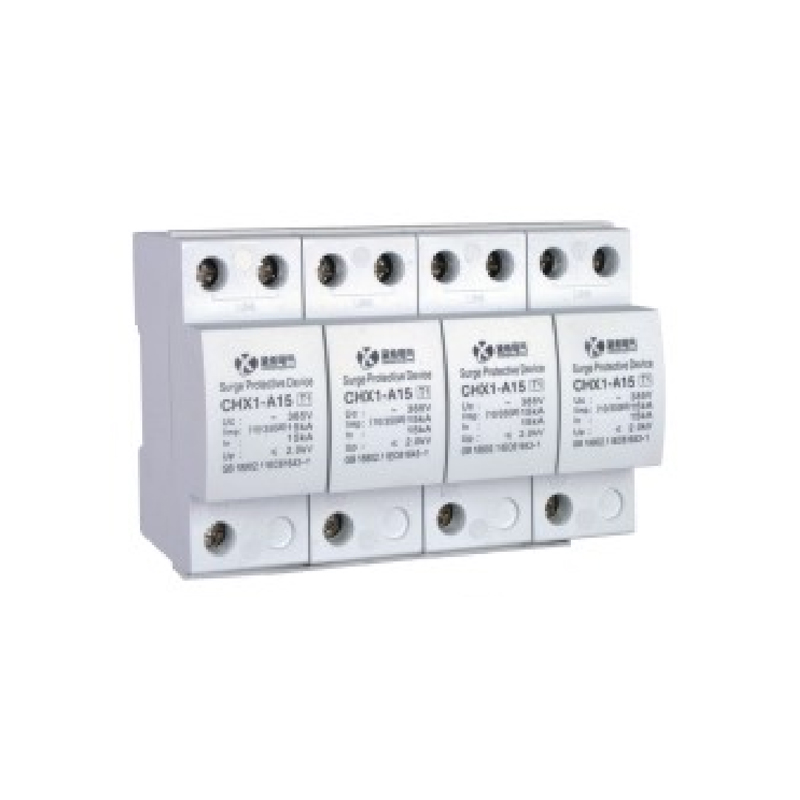
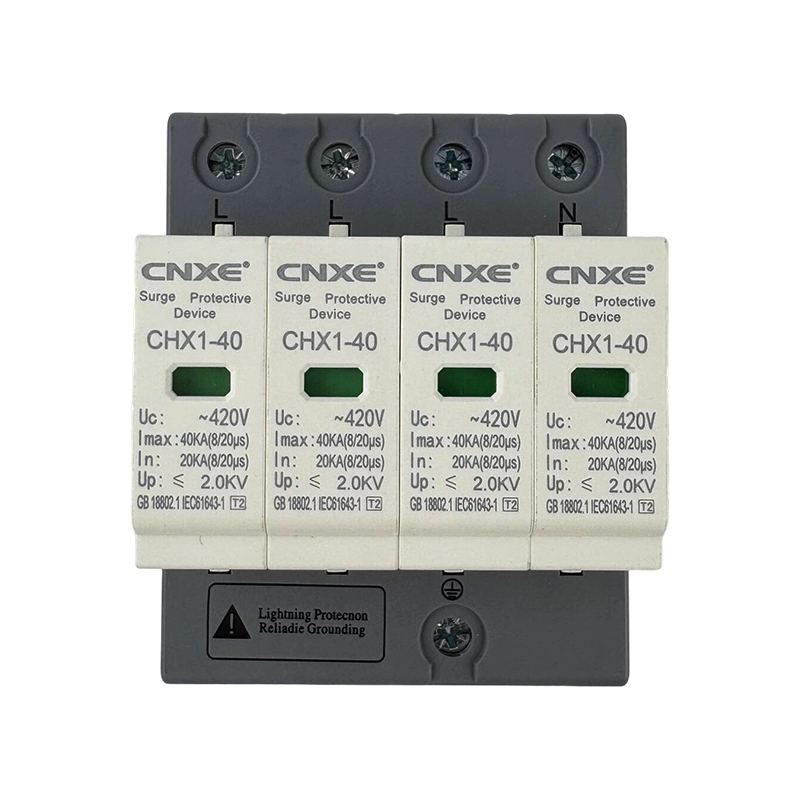
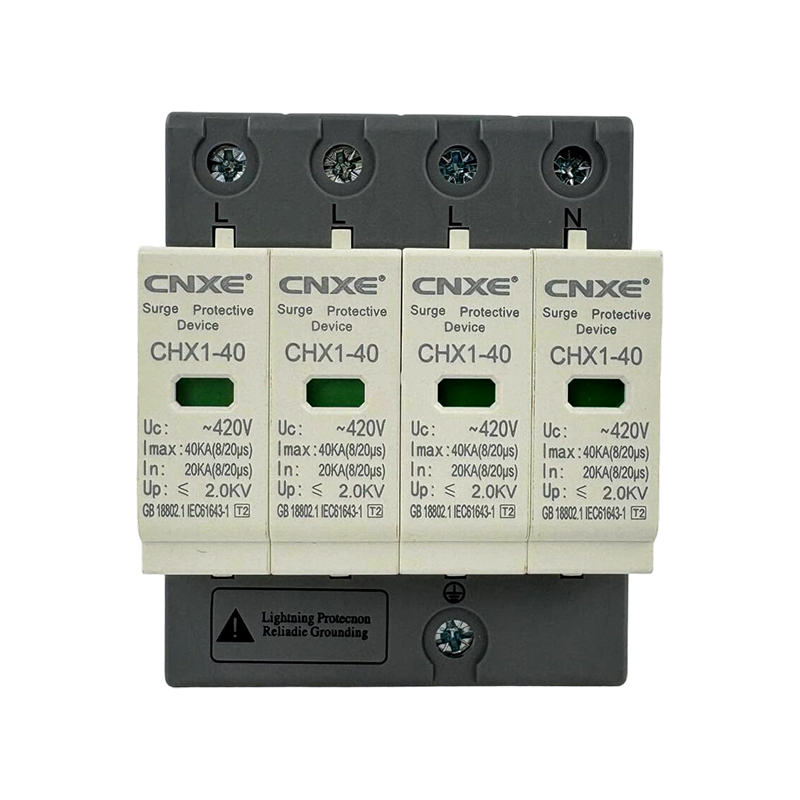
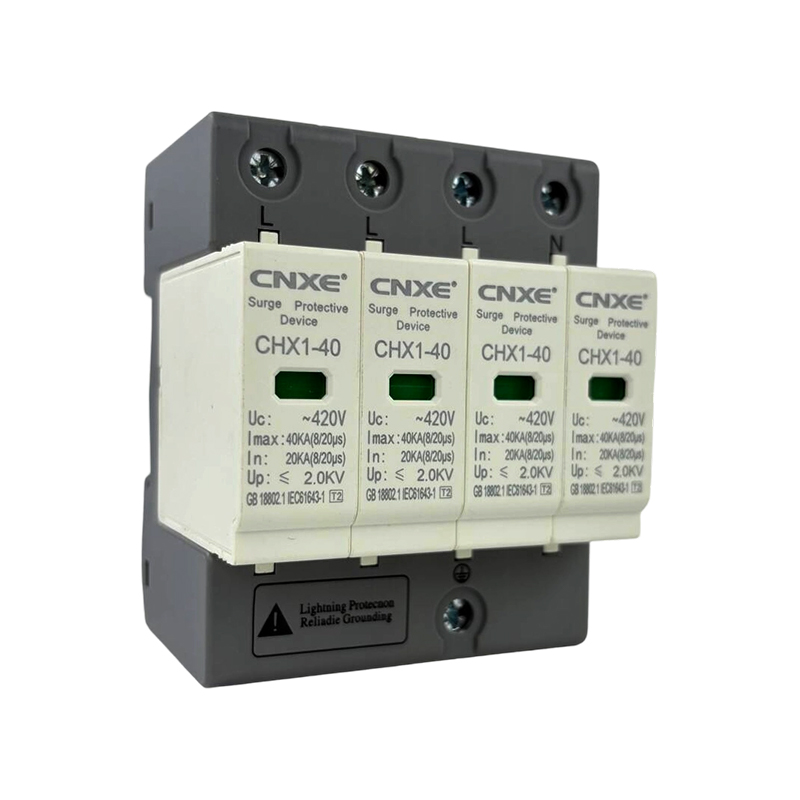
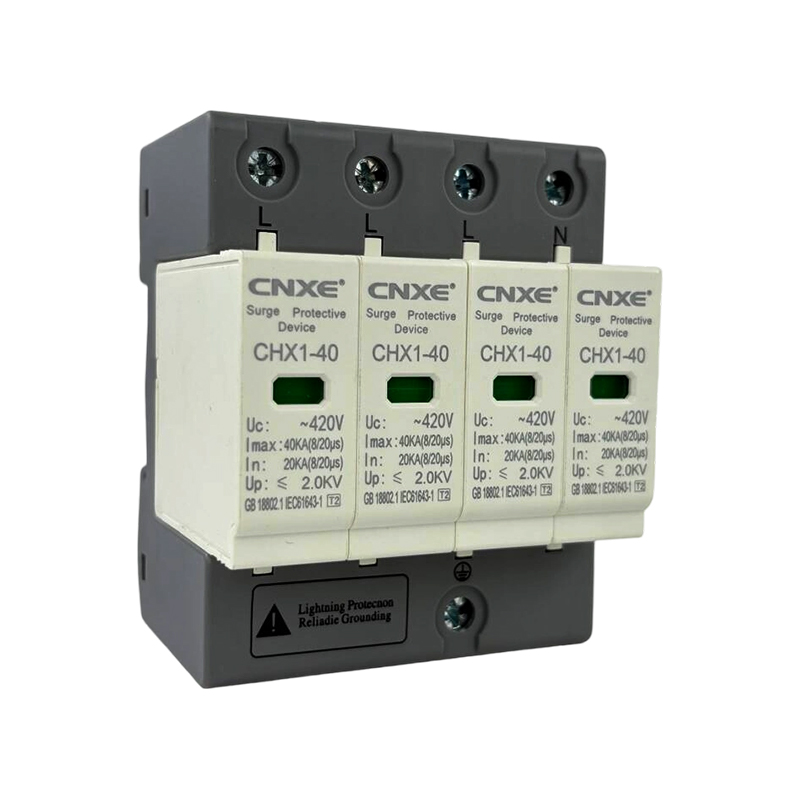
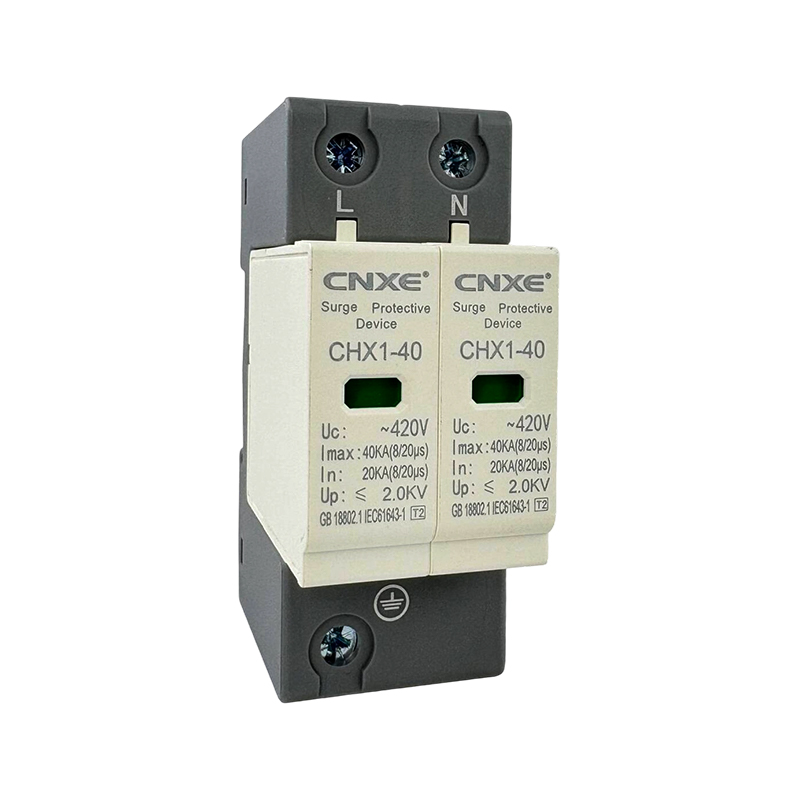
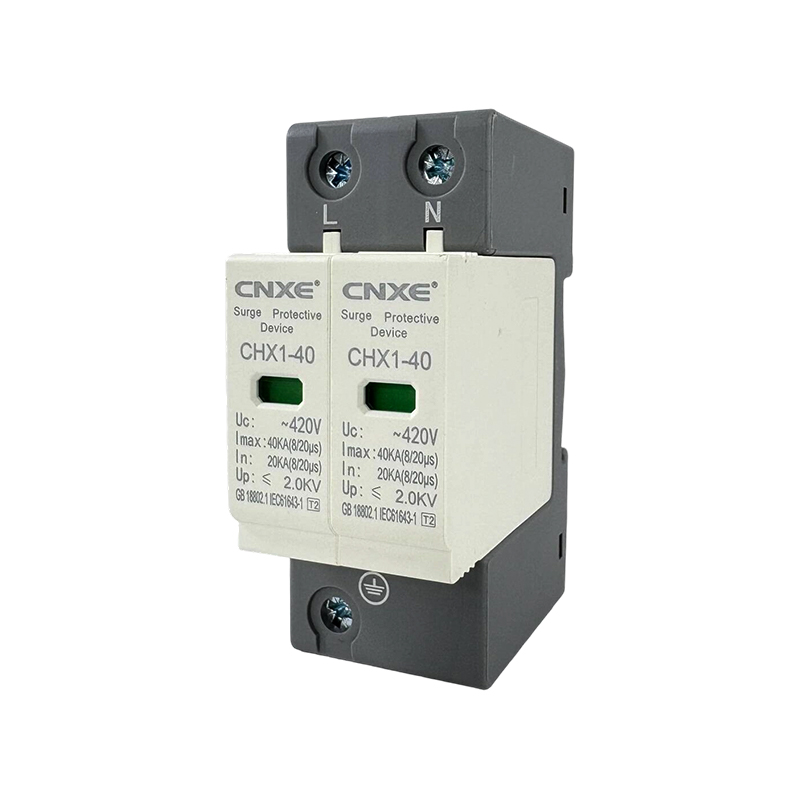
CHX1 anti-electricity shock and anti-interference Surge Protective Device
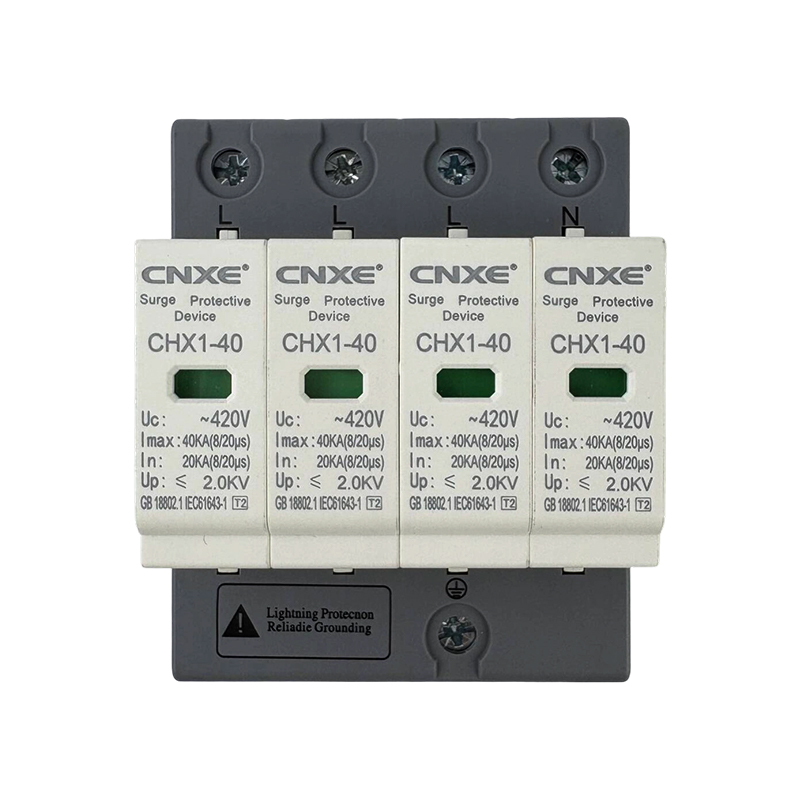
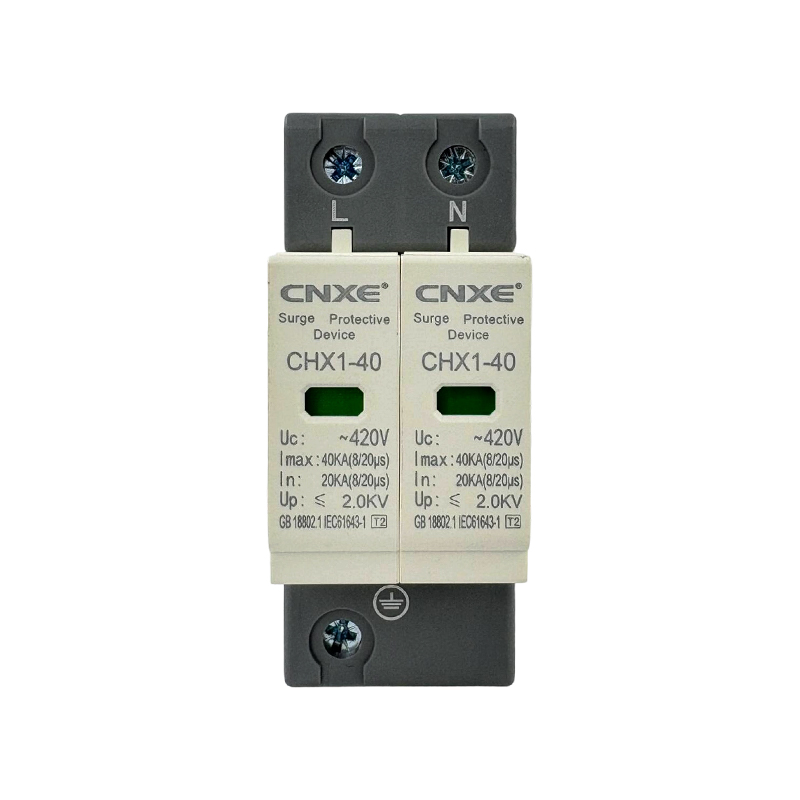
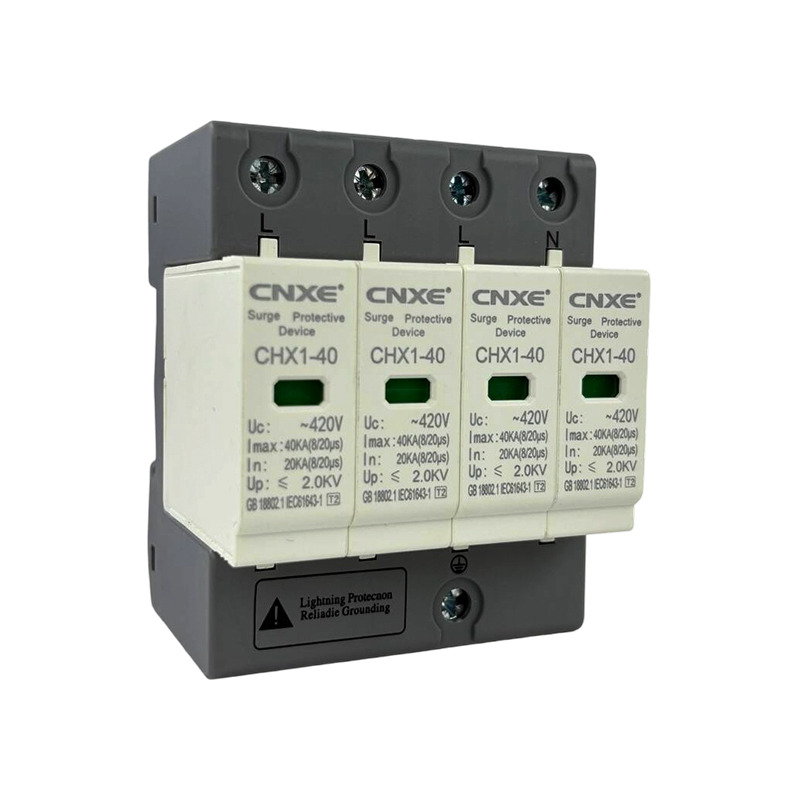
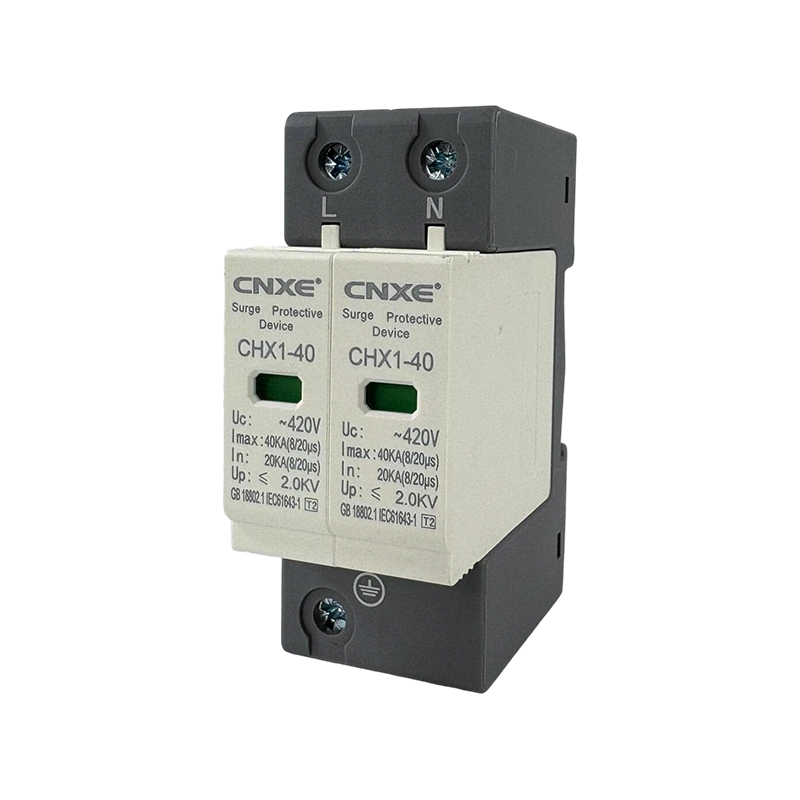
The CHX1-40 surge protector is the "core anti-electricity shock and anti-interference component" of the power distribution system. It is specifically designed to suppress lightning strikes and grid pulses, which are overvoltage shocks. It meets the anti-interference requirements of various circuit scenarios. It has a maximum current capacity of 40kA and a rated current capacity of 20kA. It can effectively absorb instantaneous overvoltages and control the residual voltage within 2.0kV, preventing equipment from being damaged by surges. It adopts a 4-module combined design, compatible with 420V AC systems, and compatible with mainstream power distribution architectures such as three-phase four-wire. It can flexibly match different scale circuit protection needs.
It is equipped with an operating status indicator light to display the working status in real time, and is combined with grounding warnings to ensure the stability of anti-electricity shock. At the same time, it is compatible with standard rail installation and can be embedded in distribution boxes and circuit breakers to work collaboratively. The construction is simple and space-saving. It is suitable for scenarios such as building entry power distribution, commercial facility circuits, and industrial precision equipment circuits. It is a "must-have model" for anti-electricity shock and anti-interference in power distribution systems. With strong current capacity, multi-adaptability, and safe visibility design, it builds a surge protection defense line for various scenarios, avoiding equipment overvoltage damage and improving circuit stability.
Low Voltage Current Transformers are essential components in power metering and protection systems. Chengxi's LMZJ1 and BH series are designed for low-voltage distribution systems, converting high currents into standardized low currents (typically 5A or 1A) for use by ammeters, protective relays, and other devices. They are widely applied in industrial metering, substation monitoring, and residential power metering.
The products offer high accuracy, meeting precision metering class standards, with excellent linearity and stable output throughout the rated current range. Constructed with ring-type cores or cast structures, they provide superior insulation performance and are suitable for operating environments ranging from -30°C to 70°C. Flexible installation options—including window-type and post-type—allow compatibility with various cabinet designs and cable specifications.
The manufacturing process rigorously controls core materials and winding techniques, ensuring minimal measurement error and excellent temperature stability. These features provide critical support for accurate power system metering and reliable protection functions.

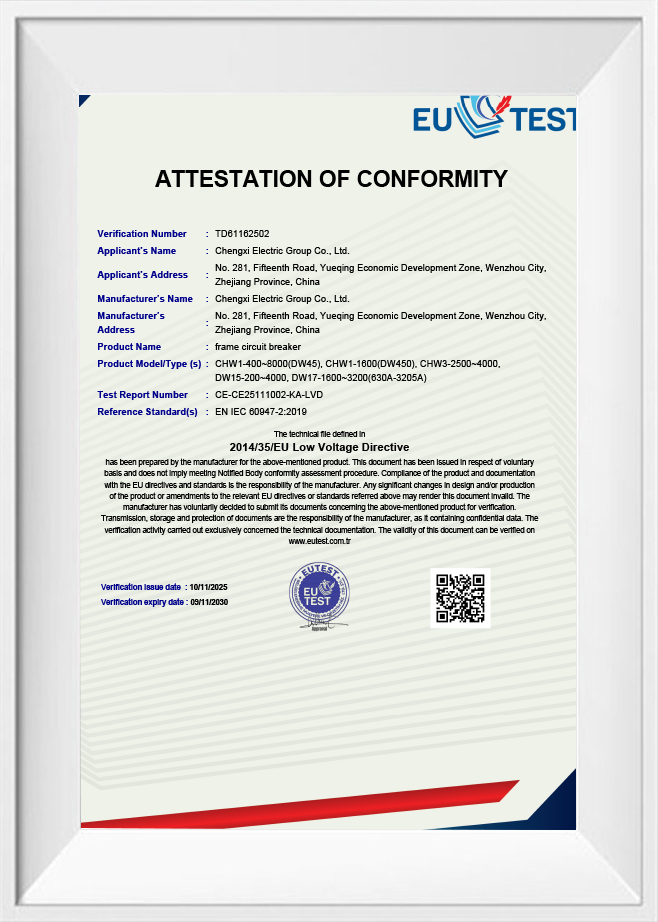
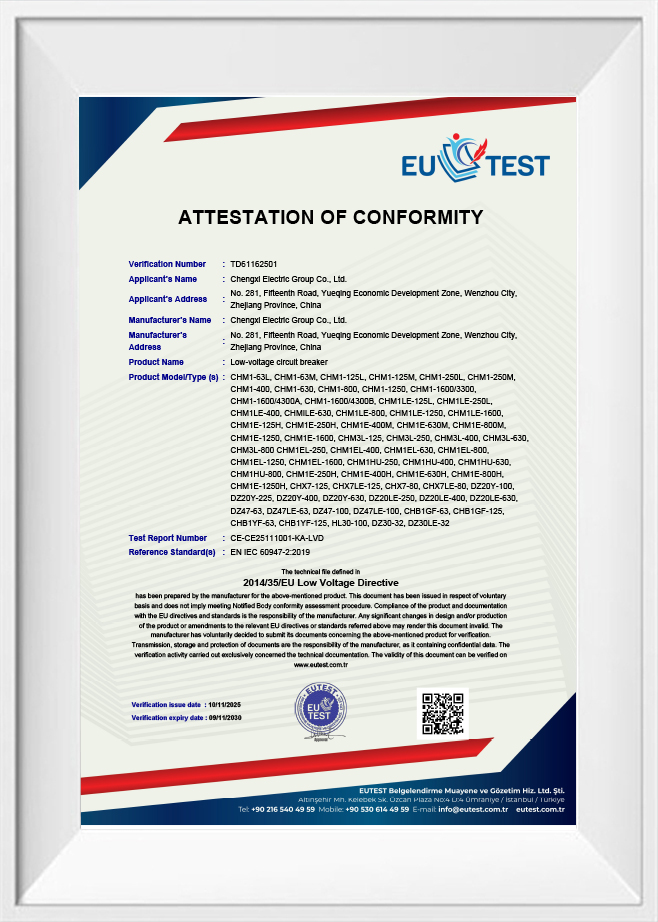
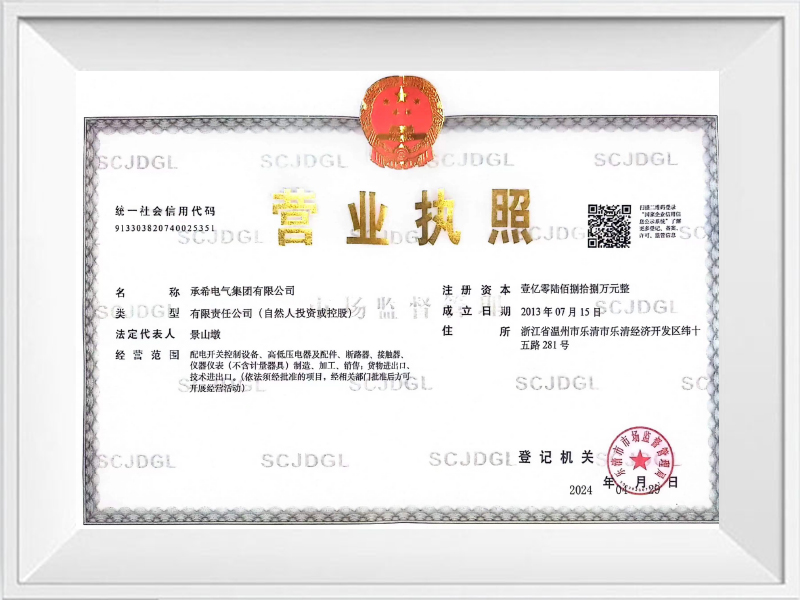
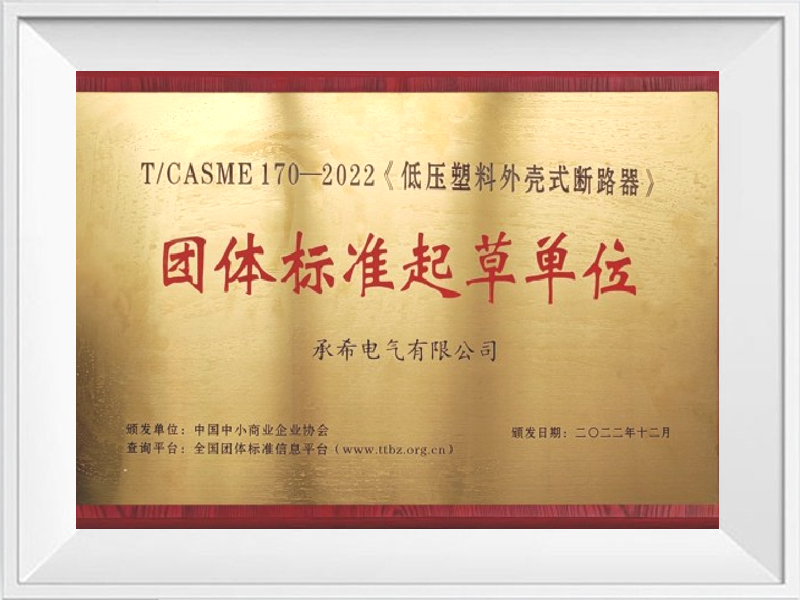
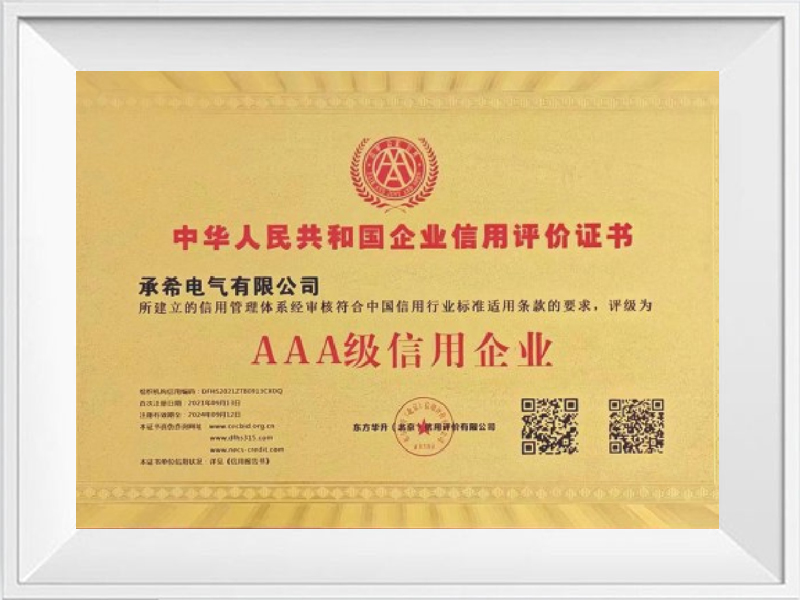
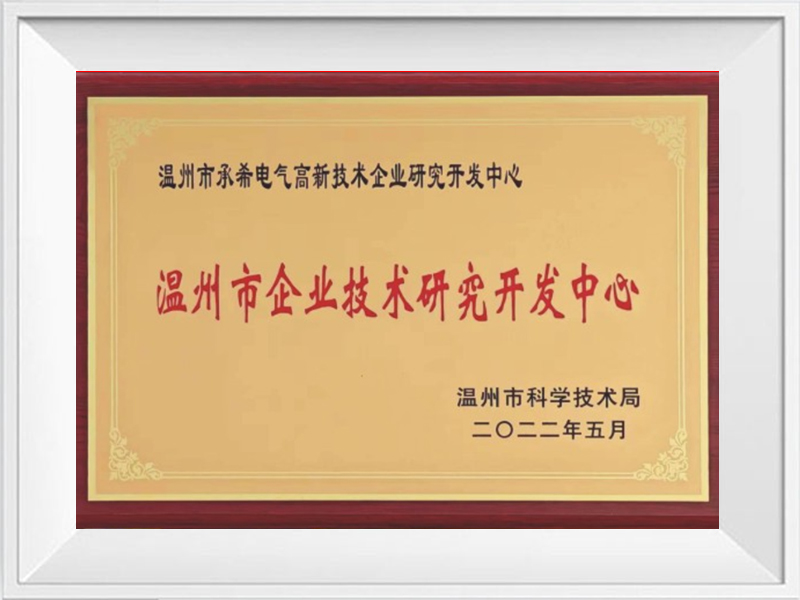
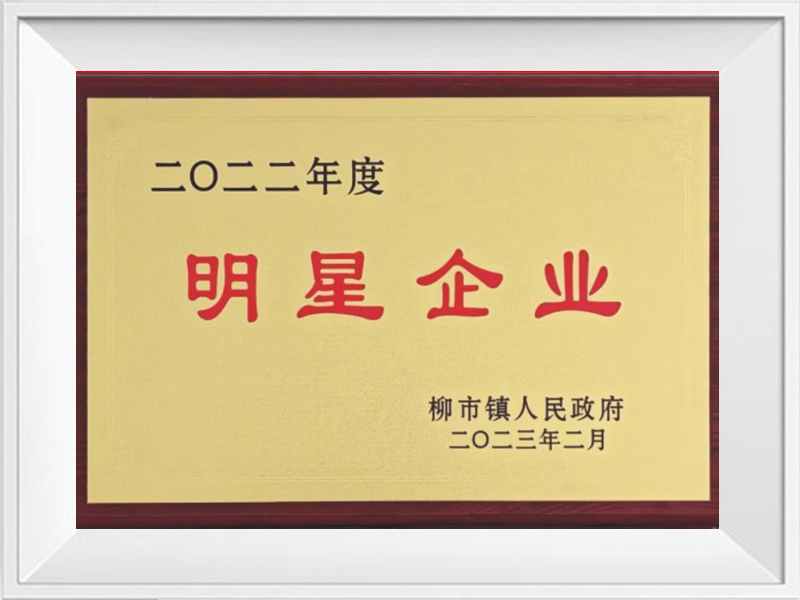
With renewable energy deployment accelerating globally, particularly in solar an...
View MoreFrom North America’s expanding solar corridors to emerging utility-scale project...
View MoreAcross international energy forums and professional engineering communities, dis...
View MoreAs global renewable energy installations continue to expand, grid stability and ...
View MoreAs power systems become increasingly complex and digitally monitored, operators ...
View MoreWhen it comes to selecting a surge protective device, there are several factors to consider:
1. Device Protection Needs: Assess the devices you want to protect. High-value items such as computers, servers, and home entertainment systems require more robust protection than lower-value devices.
2. Type of Surge Protection: There are two main types of SPDs—MOV (Metal Oxide Varistor)-based and spark gap arresters. MOV-based protectors are more common for low to medium voltage surges, while spark gap arresters are designed for high-energy surges.
3. Certifications and Standards: Look for surge protectors that meet industry standards such as UL 1449 for the United States. These certifications ensure the product's effectiveness.
4. Number of Outlets: Depending on your setup, you may need a surge protector with multiple outlets to accommodate all your devices.
5. Circuit Breaker and Reset Buttons: Some surge protectors come with a circuit breaker or reset button for added safety and convenience.
6. Warranty and Customer Support: A good warranty and reliable customer support can provide peace of mind and assistance if issues arise.
By considering these factors, you can make an informed decision when choosing a surge protective device.
Commercial surge protectors are designed to safeguard electrical equipment in offices, factories, data centers, and other large-scale facilities from power surges caused by lightning strikes, switching transients, or grid disturbances. These devices absorb or redirect excess voltage before it reaches sensitive systems. Here are some common types of commercial surge protectors and examples of how they are used:
1. Panel-Mounted Surge Protectors (Surge Protective Devices – SPDs)
These units are installed at the main electrical service panel or distribution boards. They protect the entire building's electrical infrastructure by diverting high-energy surges away from downstream equipment.
Common models: Schneider Electric Easy9 SPD, Siemens TPS3 Series, ABB OVR T2 Surge Arresters, Eaton SPD Series.
Applications: Factories, large offices, and retail facilities where multiple circuits feed sensitive loads.
2. Rack-Mount Surge Protectors
Used primarily in server rooms, data centers, and telecommunication setups, rack-mount protectors integrate into standard 19-inch racks. They often include EMI/RFI noise filtering and multiple power outlets.
Common models: Tripp Lite ISOBAR Rackmount Series, APC SurgeArrest Rackmount, CyberPower Professional Rackmount Surge Protectors.
Applications: Servers, network switches, audio/visual control systems, and communication equipment.
3. DIN-Rail Mounted Surge Protectors
DIN-rail protectors are compact SPDs designed for control panels and industrial automation systems. They fit neatly alongside relays and breakers in distribution enclosures.
Common models: Phoenix Contact VALVETRAB, Schneider A9L Series, OBO Bettermann V20 Series, Legrand DX3 SPD.
Applications: PLCs, motor control centers, HVAC systems, and process control equipment.
4. Plug-In and Point-of-Use Surge Protectors
These are the familiar power strip–type surge suppressors used at the device level. In commercial settings, heavy-duty versions are preferred, featuring high joule ratings and robust casings.
Common models: Belkin Commercial Surge Protector, Tripp Lite ISOBAR Ultra, APC SurgeArrest Performance Series.
Applications: Office computers, printers, POS systems, and laboratory equipment.
5. Coaxial and Data Line Surge Protectors
Not all surges enter through power lines—many come via communication or signal cables. Coaxial and Ethernet surge protectors prevent voltage spikes from damaging network equipment, CCTV cameras, and routers.
Common models: APC PNET1GB for Ethernet, PolyPhaser IS-50 Series for coaxial lines, Transtector Ethernet Surge Protectors.
Applications: Security systems, broadcast facilities, and communication networks.
6. Whole-Building Surge Protection Systems
In large commercial or institutional settings, a tiered protection system is often used—combining main panel SPDs, sub-panel protection, and point-of-use devices. This approach ensures a layered defense against both external and internal surge events.
Manufacturers offering full-system solutions: Schneider Electric, Eaton, ABB, Legrand, and Siemens.
A universal surge protection device is essential for several reasons:
All-In-One Protection: Universal surge protectors can safeguard a wide range of devices, from small appliances to sensitive electronics, providing a comprehensive solution.
Versatility: They are designed to work with different types of power outlets and can be used in various settings, from home to office environments.
Convenience: With multiple outlets and often additional features like USB charging, a universal surge protector can simplify your power management.
Safety: They help prevent damage to your devices from voltage surges, which can be costly to repair or replace.
Peace of Mind: Knowing your valuable electronics are protected from potentially damaging surges can provide reassurance, especially in areas prone to severe weather or unstable power grids.
Investing in a universal surge protection device is a practical step towards safeguarding your electronic assets and ensuring their longevity.
Choosing the right surge protective device involves understanding your protection needs, evaluating different types of SPDs, and considering the features and reliability of commercial options. A universal surge protection device offers convenience, versatility, and peace of mind, making it an essential addition to any home or office setup.
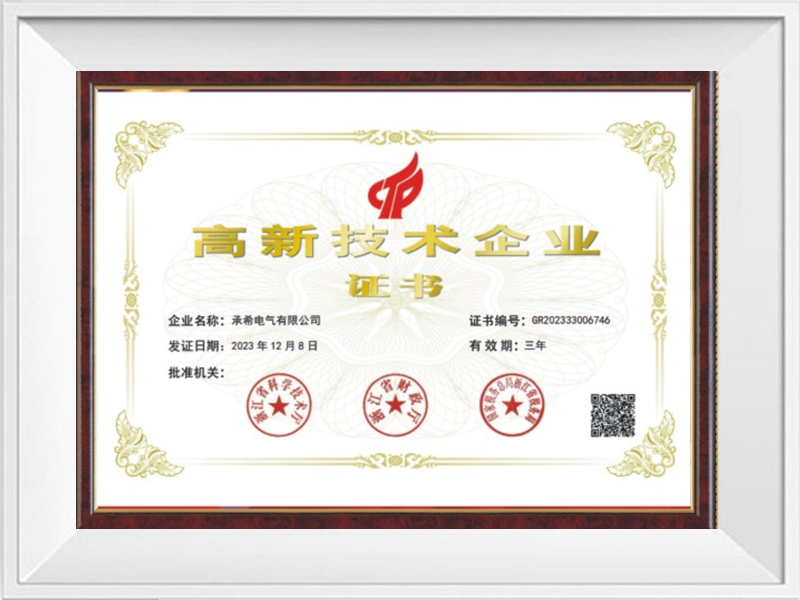
 The company is committed to providing high-quality electrical products and excellent customer service. We not only supply exquisite, top-tier products to meet your needs but also back them with a sincere and comprehensive after-sales service guarantee.
Contact Us
 +86-18067486879
 [email protected]
 281 Wei 15th Road, Yueqing Economic Development Zone, Zhejiang, China
Copyright © Chengxi Electric Group Co., Ltd. All Rights
Reserved

China Surge Protective Device (SPD)




 English
  Français
  中文简体
中文简体  русский
  Español
  عربى
عربى